
Category


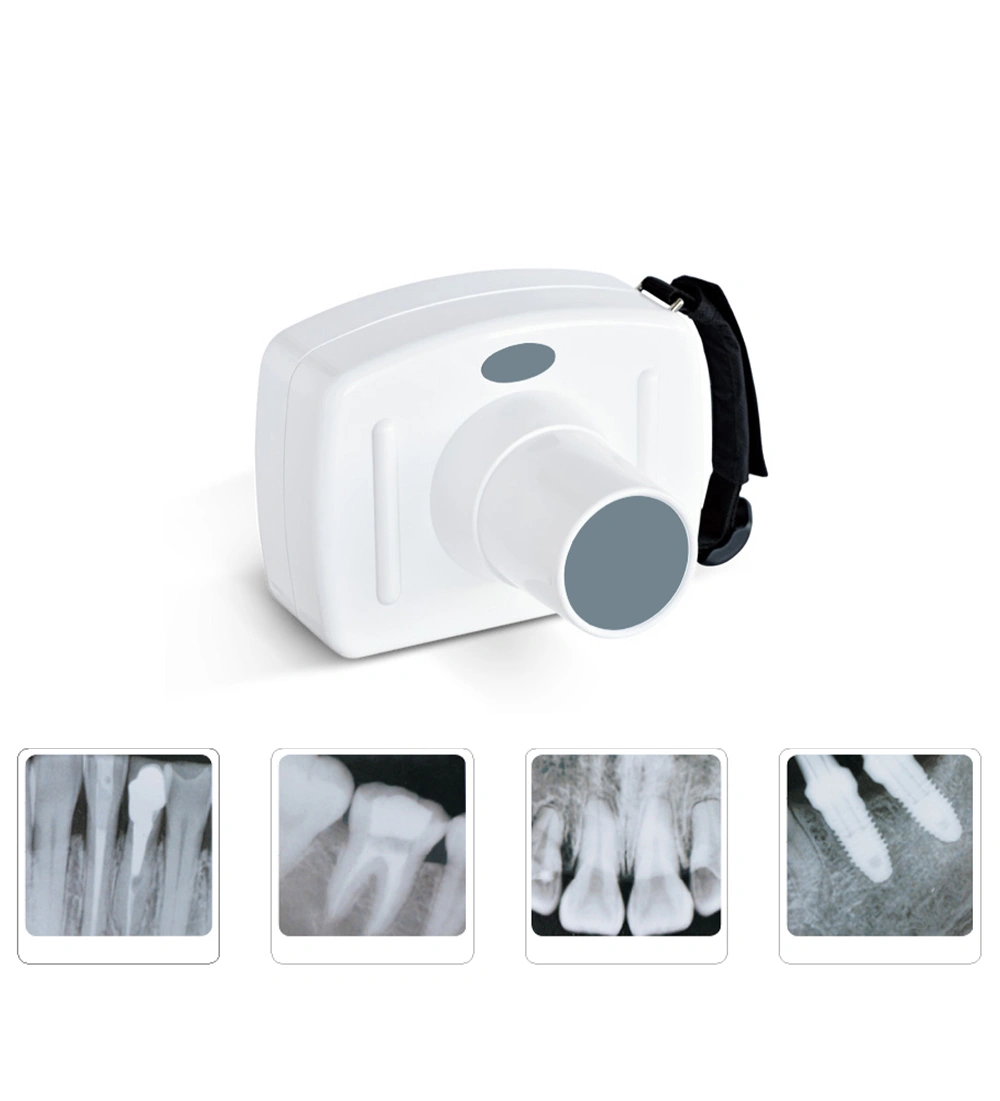
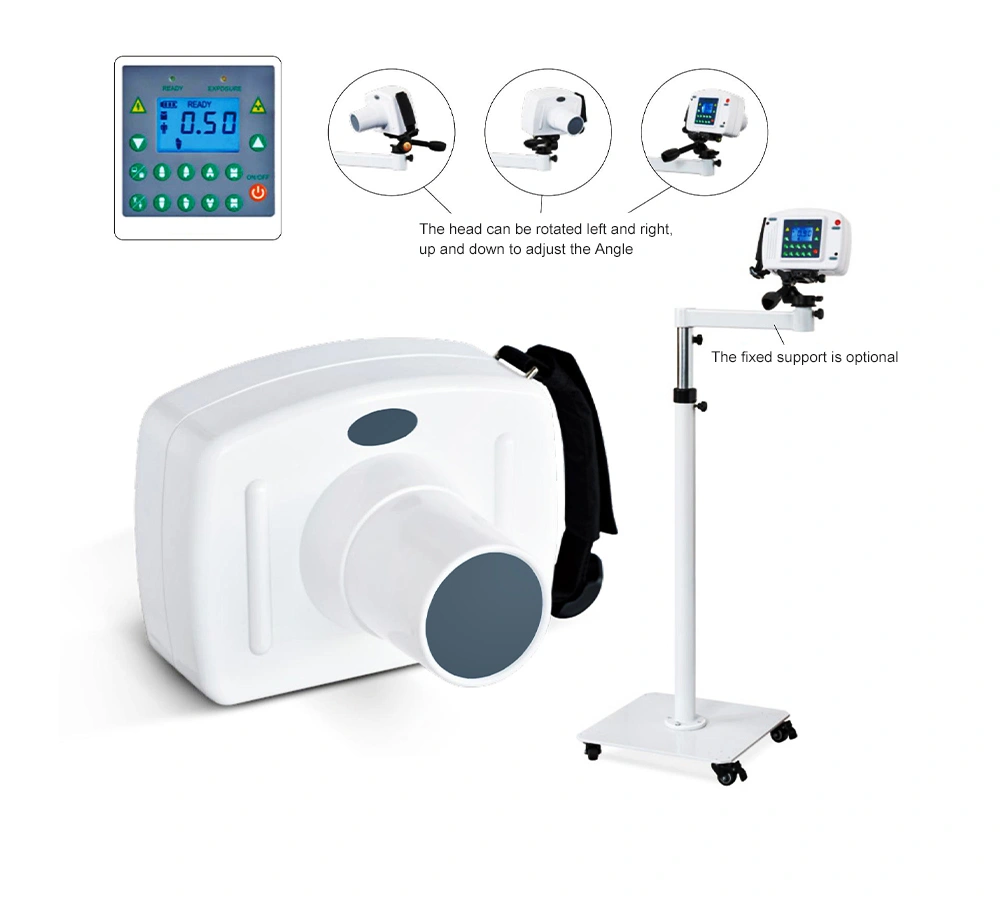
MY-D038H Portable Dental Digital X-ray Machine Camera Electric Plastic Carton Box Smart White X Ray Machine Price Gua X-ray Sensor 2kg
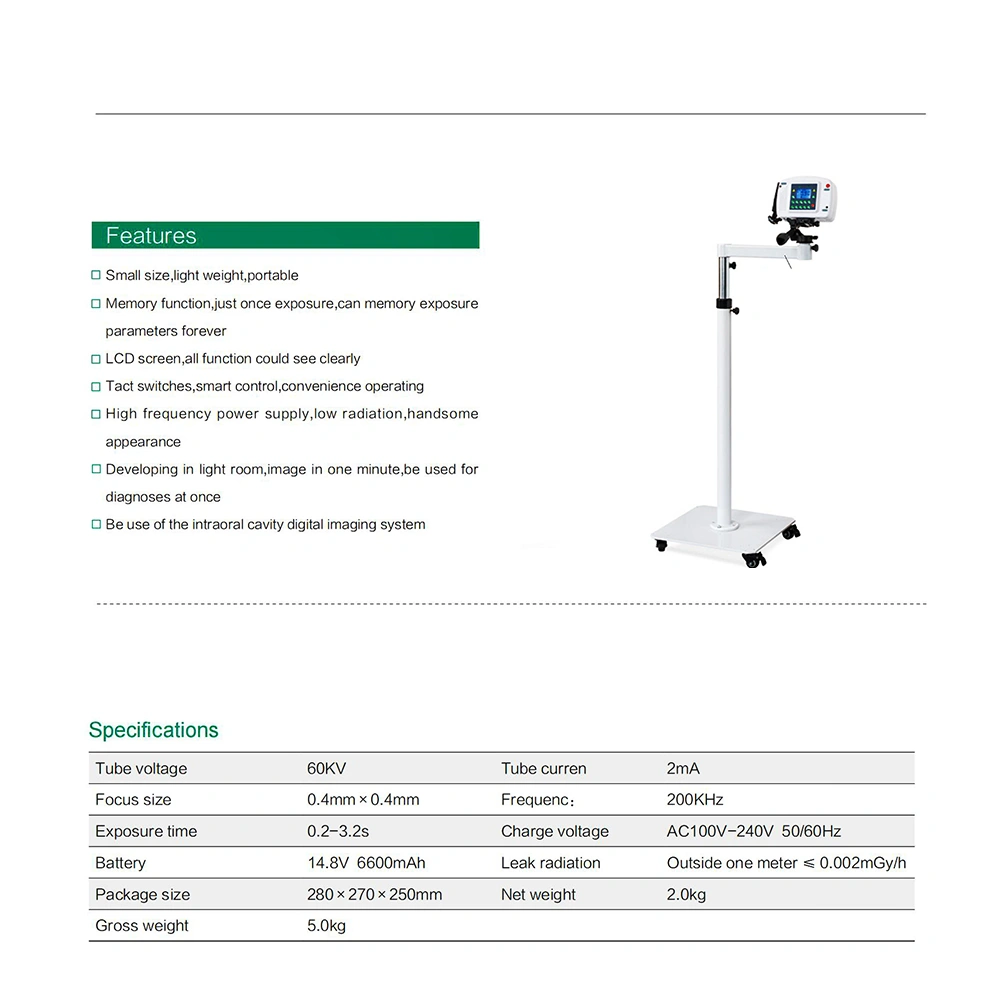
Focus size 0.4mm×0.4mm Frequenc: 200KHz
Exposure time 0.2-3.2s Charge voltage AC100V-240V 50/60Hz
Battery 14.8V 6600mAh Leak radiation Outside one meter ≤ 0.002mGy/h
Package size 280×270×250mm Net weight 2.0kg
Gross weight 5.0kg
MY-D038H Portable Dental Digital X-ray Machine Camera Electric Plastic Carton Box Smart White X Ray Machine Price Gua X-ray Sensor 2kg
The scope of application for Dental X-ray machines is extensive and encompasses various aspects of oral healthcare. These specialized imaging devices are used to support a wide range of diagnostic and treatment planning needs. Here's a detailed overview of their applicable scenarios:
Routine Dental Check-ups: Dental X-rays are a routine part of most dental examinations, even for patients with no apparent oral health issues. They help dentists identify early signs of decay, gum disease, or other potential problems that may not be visible to the naked eye.
Pediatric Dentistry: In pediatric dentistry, X-rays play a crucial role in monitoring the growth and development of children's teeth and jaws. They are used to detect any abnormalities in tooth eruption, assess the presence of impacted teeth, and guide orthodontic planning.
Periodontal Disease Assessment: Periodontal (gum) disease can lead to bone loss, which can be detected and monitored through dental X-rays. These images help dentists evaluate the severity of gum disease and plan appropriate treatments to prevent further damage.
Endodontics: Endodontics deals with the treatment of the tooth's pulp, which can become infected or inflamed. Dental X-rays are essential for diagnosing root canal infections, assessing the condition of the root canal system, and guiding root canal treatments.
Oral Surgery: Before performing oral surgeries such as tooth extractions, implant placements, or jaw surgeries, dental X-rays provide vital information about the patient's anatomy. They help surgeons plan the procedure, identify potential complications, and ensure a safe and successful outcome.
Orthodontics: Orthodontists rely on dental X-rays to assess the alignment of teeth and jaws, plan corrective treatments like braces or Invisalign, and monitor progress throughout the course of treatment.
Dental Trauma Evaluation: In cases of dental trauma, such as a knocked-out tooth or facial injury, X-rays help dentists assess the extent of damage to teeth, roots, and surrounding bone structures.
Dental Implantology: Before placing dental implants, X-rays are used to evaluate the bone density and quality in the proposed implant site. They also help dentists determine the appropriate implant size, shape, and placement to ensure a successful outcome.
Oral Pathology: Dental X-rays can reveal abnormalities in the jawbone or soft tissues of the mouth, such as cysts, tumors, or other pathological conditions. Early detection of these issues is crucial for timely intervention and treatment.
Forensic Dentistry: In forensic dentistry, dental X-rays can be used to identify individuals through their unique dental characteristics, aiding in criminal investigations and missing persons cases.
In conclusion, Dental X-ray machines have a broad scope of application in various aspects of oral healthcare, from routine check-ups to complex surgical procedures. They are indispensable tools that enable dentists to provide more accurate diagnoses, effective treatments, and improved patient outcomes.
 MY-D072J Professional MAYAMED Wireless Intraoral Scanner supplierTechnical Specification: Scan Depth:0-15mm Flie format: STL, PLY, OBJ Scanner tip disinfection: Autoclavable with 100 times Connection: Wifi Number of batteries:4 Battery: Lithium battery,3120mAh Type of Scanner tips: Standard, Side, Pediatric Battery life:45mins continnues scan Battery charging time: 60mins Weight: Battery containing 325g, Without battery 250g Scanner size(L*W*H): 248mm*56mm*36mm Size of scanner tip (Length*width*Height) : Standard Tip:93mm*20mm*20mm; Side Tip:93mm*21mm*17mm; Pediatric Tip: 93mm*16mm*15mm Recommend computer specifications CPU: Intel/i7-12700HX or Above GPU: NVIDIA GeForce GTX3060 6G or Above Memory: 32G high-speed or Above Storage 1T high-speed or Above Ports USB3.0 or AboveMY-D072JUS $5,796.00 - US $7,245.00Send Inquiry
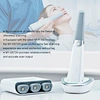 MY-D072H MAYAMED dental equipment Wireless Intraoral scannerScan Field:Standard scanner tip: 16 mm × 12 mm Mini scanner tip: 12 mm × 9 mm Scan Depth: -2mm to 20 mm from exit surface of tip Scan Tip Sterilization: Autoclavable 100 times 121°C 102.9kPa 30 mins 134°C 205.8kPa 4 mins Scan Tip Heating:40s instant heating(Anti-fogging) Scan Principle:Non-contact scanning with the structured light Wireless Technology:Wi-Fi 6(802.11a/n/ac/ax) Effective Wireless Range:Same room, up to 5m Battery Life:2 hours of continuous scanning. 10 days sleep mode Dimension :270(L)x50(W)x40(H)mm(includes battery, tip) Total Weight:330±20g(includes battery, tip) Output:STL, OBJ, PLY Connector:USB 3.0 Power Input:12V DC/3AMY-D072HUS $8,124.00 - US $10,155.00Send Inquiry
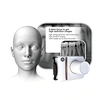 MY-D038M MAYAMED dental image equipment Dental X-ray Unit for manufacturer1:Power adapter power supply:Uniphase AC 100~ 240V, +10% . 2:Supply frequency: 50/60Hz,士1Hz 3:Input power:950mAh 4:Charge voltage:DC 25.2V 5:Charge current:1.0A 6Nominal value of the focal point:0.4mm 7:Anode angle:12° 8:Available maximum tube voltage at 2mA:60kV 9:Maximum output electric power:0.12kW 10: Maximum loading factor combination: 60kV、2mA、2sMY-D038MUS $399.00 - US $505.00Send Inquiry
 MY-D038G-N1 MAYAMED dental equipment Dental X-ray UnitTechnical Specifications: Product Name: RAYL Handheld X-Ray Voltage :DC22.2V Battery: 950mAh / 21.09Wh Focal Spot to Skin Distance: ≥ 200mm Tube Voltage: 70Kv Tube Current :2mA Exposure Time :0.01~2.0s Net Weight :1.6Kg Charging Input: AC100~240V Charging Output: DC25.2VMY-D038G-N1US $456.00 - US $570.00Send Inquiry
Send Message