
Category


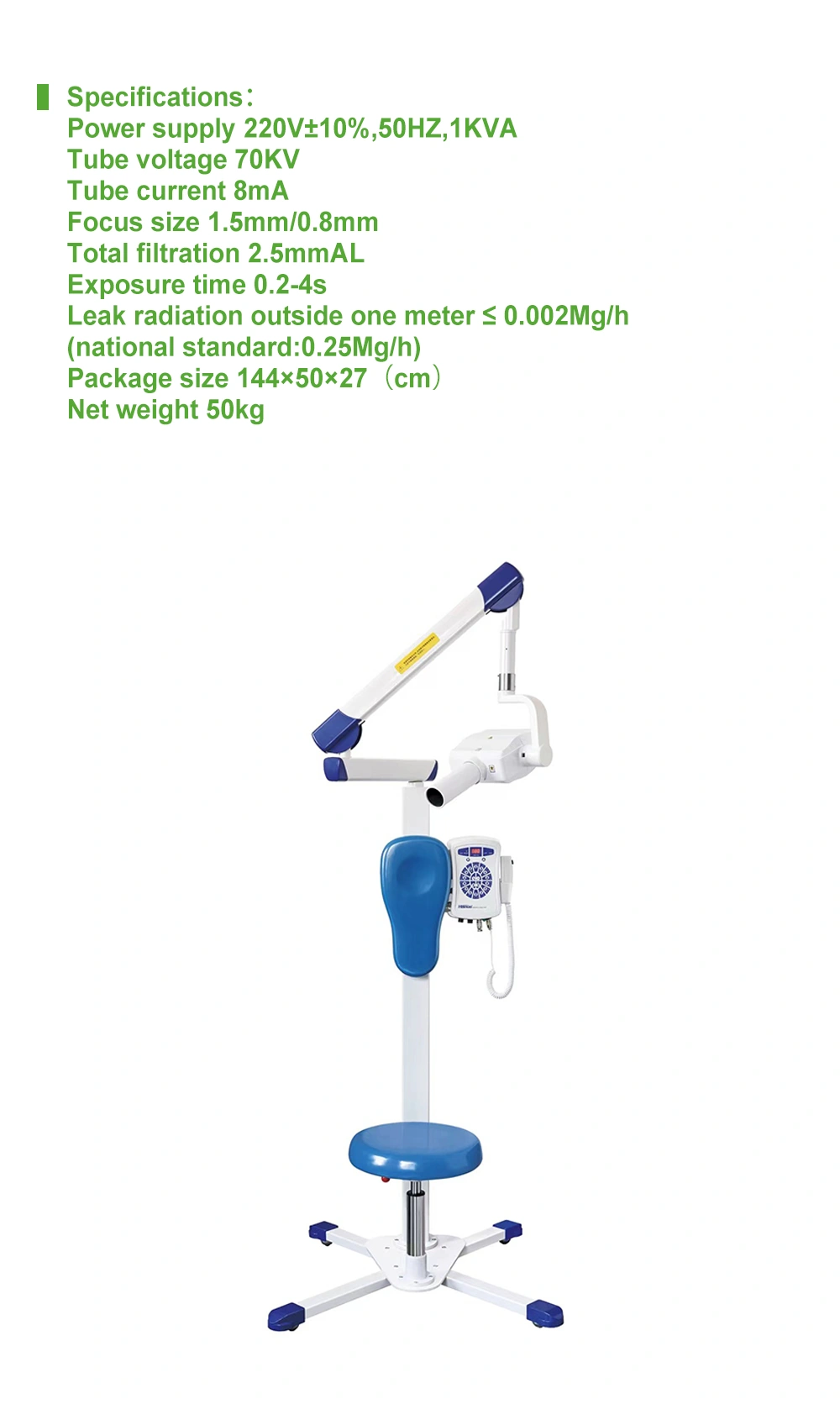
MY-D041 Factory price 70Kv Portable dental X ray unit for dentist use
Power supply 220V±10%,50HZ,1KVA
Tube voltage 70KV
Tube current 8mA
Focus size 1.5mm/0.8mm
Total filtration 2.5mmAL
Exposure time 0.2-4s
Leak radiation outside one meter ≤ 0.002Mg/h(national standard:0.25Mg/h)
Package size 144×50×27(cm)
Net weight 50kg
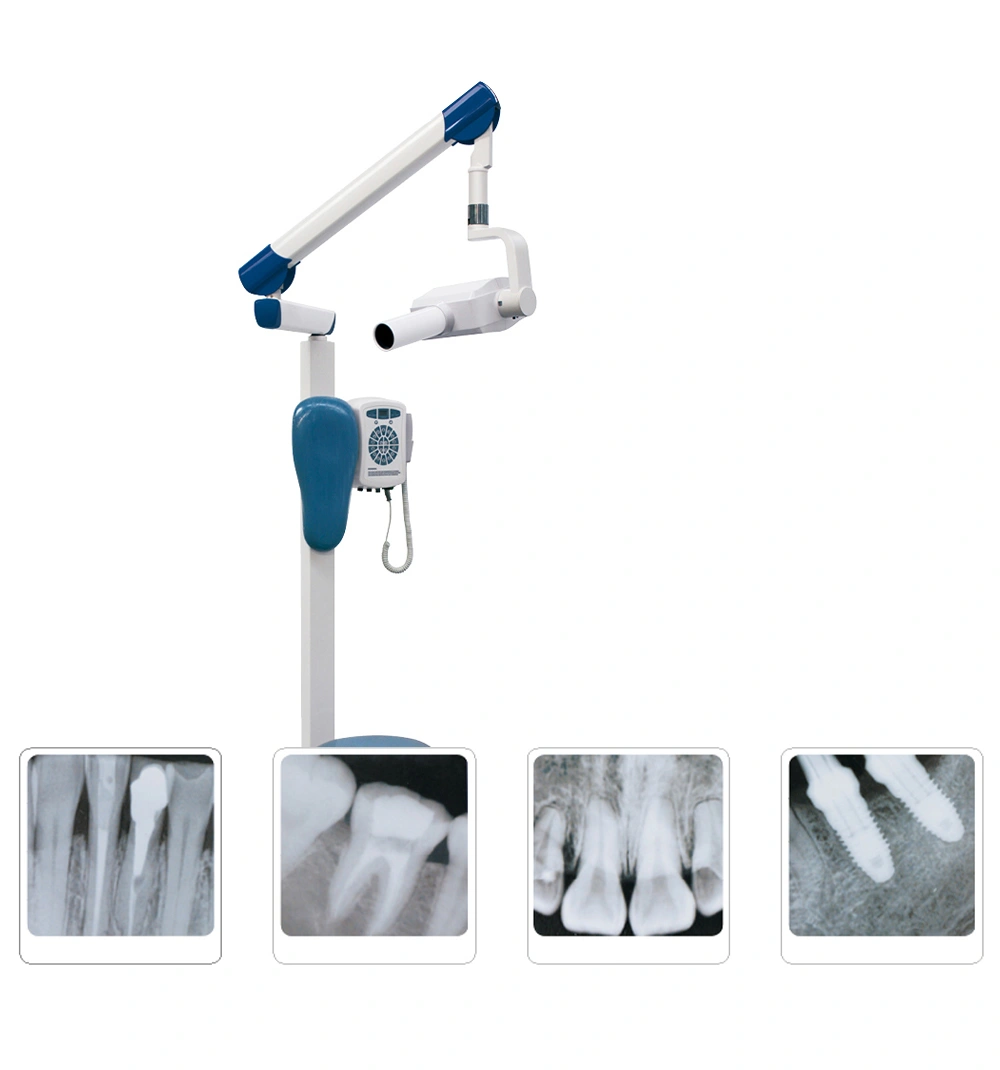
Dental X-ray machines play a crucial role in the diagnosis and treatment planning of oral health issues. They are specialized medical imaging devices designed to produce high-resolution images of the teeth, jaws, and surrounding structures, enabling dentists to detect and assess conditions that may not be visible during a routine visual examination.
Here are some key functions and benefits of dental X-ray machines:
Early Detection of Dental Problems: Dental X-rays allow dentists to identify hidden issues such as cavities forming between teeth, bone loss due to gum disease, impacted teeth, abscesses (infections), and cysts or tumors in the jawbone at an early stage. Early detection often leads to more conservative and less invasive treatments.
Assessment of Tooth Decay: By capturing detailed images of the tooth structure, X-rays reveal the extent of decay, enabling dentists to determine the most appropriate treatment method, whether it's a simple filling, root canal therapy, or extraction.
Monitoring Growth and Development: In children and adolescents, dental X-rays are used to monitor the growth and development of teeth and jaws, ensuring proper alignment and addressing potential issues like crowding or impacted teeth before they become problematic.
Planning Complex Treatments: Before performing complex procedures like dental implants, root canal surgeries, or orthodontic treatments, X-rays provide vital information about the patient's unique anatomy, helping dentists plan the most effective and safe course of action.
Evaluating Jawbone Health: Dental X-rays can assess the health of the jawbone, which is essential for supporting teeth and anchoring dental implants. They can detect bone loss caused by periodontal disease or other conditions, guiding treatment decisions.
Tracking Treatment Progress: Follow-up X-rays allow dentists to monitor the progress of treatments, such as the healing of a tooth after root canal therapy or the integration of a dental implant into the jawbone.
Patient Education: X-ray images serve as valuable tools for educating patients about their oral health status, helping them understand the severity of any issues and the importance of timely treatment.
Improving Accuracy and Precision: By providing a clear, two-dimensional (or even three-dimensional with advanced technologies) view of the oral cavity, dental X-rays enhance the accuracy and precision of diagnoses and treatments, leading to better outcomes for patients.
In summary, dental X-ray machines are indispensable tools in modern dental practice, enabling dentists to provide more comprehensive, informed, and effective care to their patients.
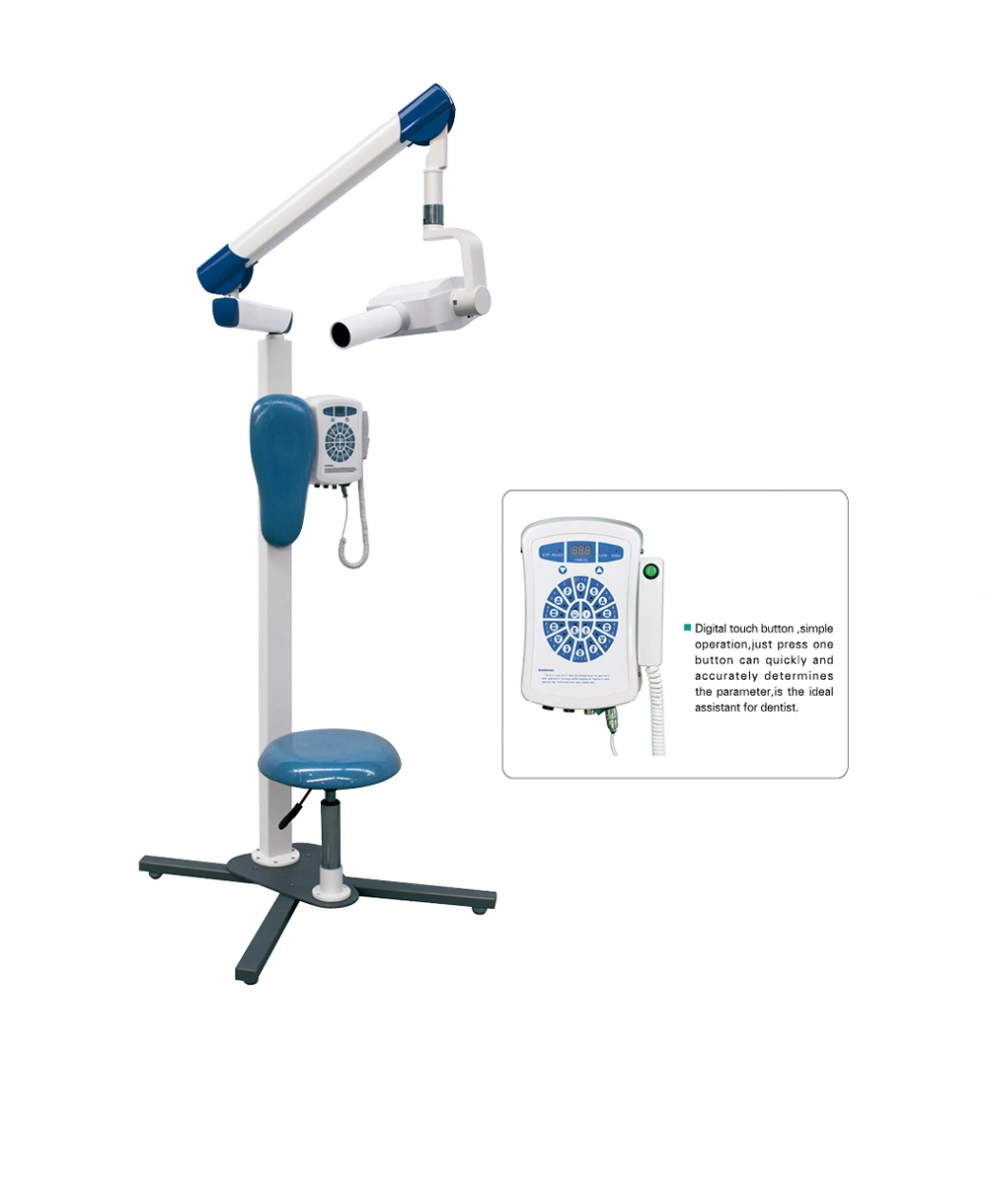
 MY-D072J Professional MAYAMED Wireless Intraoral Scanner supplierTechnical Specification: Scan Depth:0-15mm Flie format: STL, PLY, OBJ Scanner tip disinfection: Autoclavable with 100 times Connection: Wifi Number of batteries:4 Battery: Lithium battery,3120mAh Type of Scanner tips: Standard, Side, Pediatric Battery life:45mins continnues scan Battery charging time: 60mins Weight: Battery containing 325g, Without battery 250g Scanner size(L*W*H): 248mm*56mm*36mm Size of scanner tip (Length*width*Height) : Standard Tip:93mm*20mm*20mm; Side Tip:93mm*21mm*17mm; Pediatric Tip: 93mm*16mm*15mm Recommend computer specifications CPU: Intel/i7-12700HX or Above GPU: NVIDIA GeForce GTX3060 6G or Above Memory: 32G high-speed or Above Storage 1T high-speed or Above Ports USB3.0 or AboveMY-D072JUS $5,796.00 - US $7,245.00Send Inquiry
 MY-D072H MAYAMED dental equipment Wireless Intraoral scannerScan Field:Standard scanner tip: 16 mm × 12 mm Mini scanner tip: 12 mm × 9 mm Scan Depth: -2mm to 20 mm from exit surface of tip Scan Tip Sterilization: Autoclavable 100 times 121°C 102.9kPa 30 mins 134°C 205.8kPa 4 mins Scan Tip Heating:40s instant heating(Anti-fogging) Scan Principle:Non-contact scanning with the structured light Wireless Technology:Wi-Fi 6(802.11a/n/ac/ax) Effective Wireless Range:Same room, up to 5m Battery Life:2 hours of continuous scanning. 10 days sleep mode Dimension :270(L)x50(W)x40(H)mm(includes battery, tip) Total Weight:330±20g(includes battery, tip) Output:STL, OBJ, PLY Connector:USB 3.0 Power Input:12V DC/3AMY-D072HUS $8,124.00 - US $10,155.00Send Inquiry
 MY-D038M MAYAMED dental image equipment Dental X-ray Unit for manufacturer1:Power adapter power supply:Uniphase AC 100~ 240V, +10% . 2:Supply frequency: 50/60Hz,士1Hz 3:Input power:950mAh 4:Charge voltage:DC 25.2V 5:Charge current:1.0A 6Nominal value of the focal point:0.4mm 7:Anode angle:12° 8:Available maximum tube voltage at 2mA:60kV 9:Maximum output electric power:0.12kW 10: Maximum loading factor combination: 60kV、2mA、2sMY-D038MUS $399.00 - US $505.00Send Inquiry
 MY-D038G-N1 MAYAMED dental equipment Dental X-ray UnitTechnical Specifications: Product Name: RAYL Handheld X-Ray Voltage :DC22.2V Battery: 950mAh / 21.09Wh Focal Spot to Skin Distance: ≥ 200mm Tube Voltage: 70Kv Tube Current :2mA Exposure Time :0.01~2.0s Net Weight :1.6Kg Charging Input: AC100~240V Charging Output: DC25.2VMY-D038G-N1US $456.00 - US $570.00Send Inquiry
Send Message